Field report · Ikh Nart Expedition
Across the Steppe and Gobi — Ikh Nart to the Southern Gobi, September–October 2026
From 24 September to 3 October, we travelled with four travellers on a nine-day journey from Ulaanbaatar through Ikh Nart and the Gobi before returning north through Ongi and Kharkhorin. The route combined several of Mongolia’s very different landscapes, from the valleys of Ikh Nart and Ikh Gazariin Chuluu to the open steppe and desert of the Southern Gobi.
- Departure
- 24 September 2026
- Region
- Central Mongolia and the Southern Gobi
- Duration
- 9 days
- Group
- 4 travellers
- Guides
- Arthur Davies
- Weather
- Clear and generally dry, with colder mornings and evenings
Wildlife was at the centre of the journey. We spent two days in Ikh Nart, one day exploring Ikh Gazariin Chuluu, and continued south towards Dalanzadgad, Yolyn Am, Khongoriin Els and Bayanzag. We then travelled north through Ongi and Kharkhorin before returning to Ulaanbaatar.
Route — Ulaanbaatar · Ikh Nart · Ikh Gazariin Chuluu · Dalanzadgad · Yolyn Am · Khongoriin Els · Bayanzag · Ongi · Kharkhorin · Ulaanbaatar
Into Ikh Nart
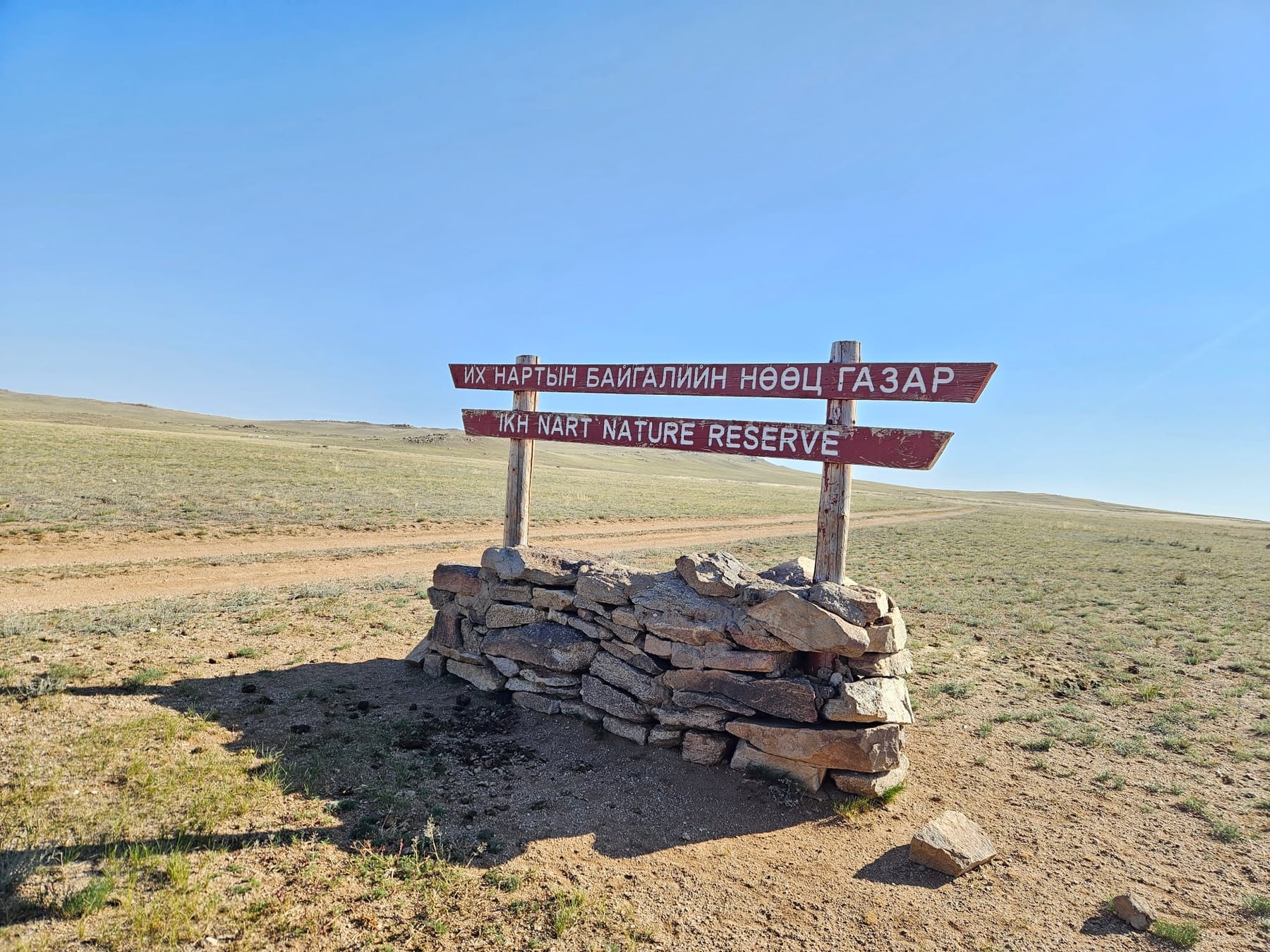
We left Ulaanbaatar on September 24th and travelled south-east towards Ikh Nart Nature Reserve. We spent two days in the reserve, giving the group enough time to explore several of its valleys and rocky areas and settle into the rhythm of wildlife observation.
At this time of year, the research centre is no longer open to visitors, so we camped inside the reserve, in the designated area near the river, south of the research centre.
Ikh Nart is particularly well suited to slow exploration. Argali and Siberian Ibex are closely associated with the rocky areas, while Mongolian Gazelles move across the open steppe surrounding them. Foxes, Tolai Hares and several species of birds can also be found throughout the reserve.
We spent much of our time outside from early morning, when wildlife was most active. Rather than following a fixed itinerary, we moved between different areas depending on the conditions and where animals were being seen.
Early mornings in the reserve
Camping directly in the reserve allowed us to start each morning close to the areas where we wanted to observe wildlife. We usually woke around 5:30 am, before sunrise, and were out in the field while the temperatures were still cool.
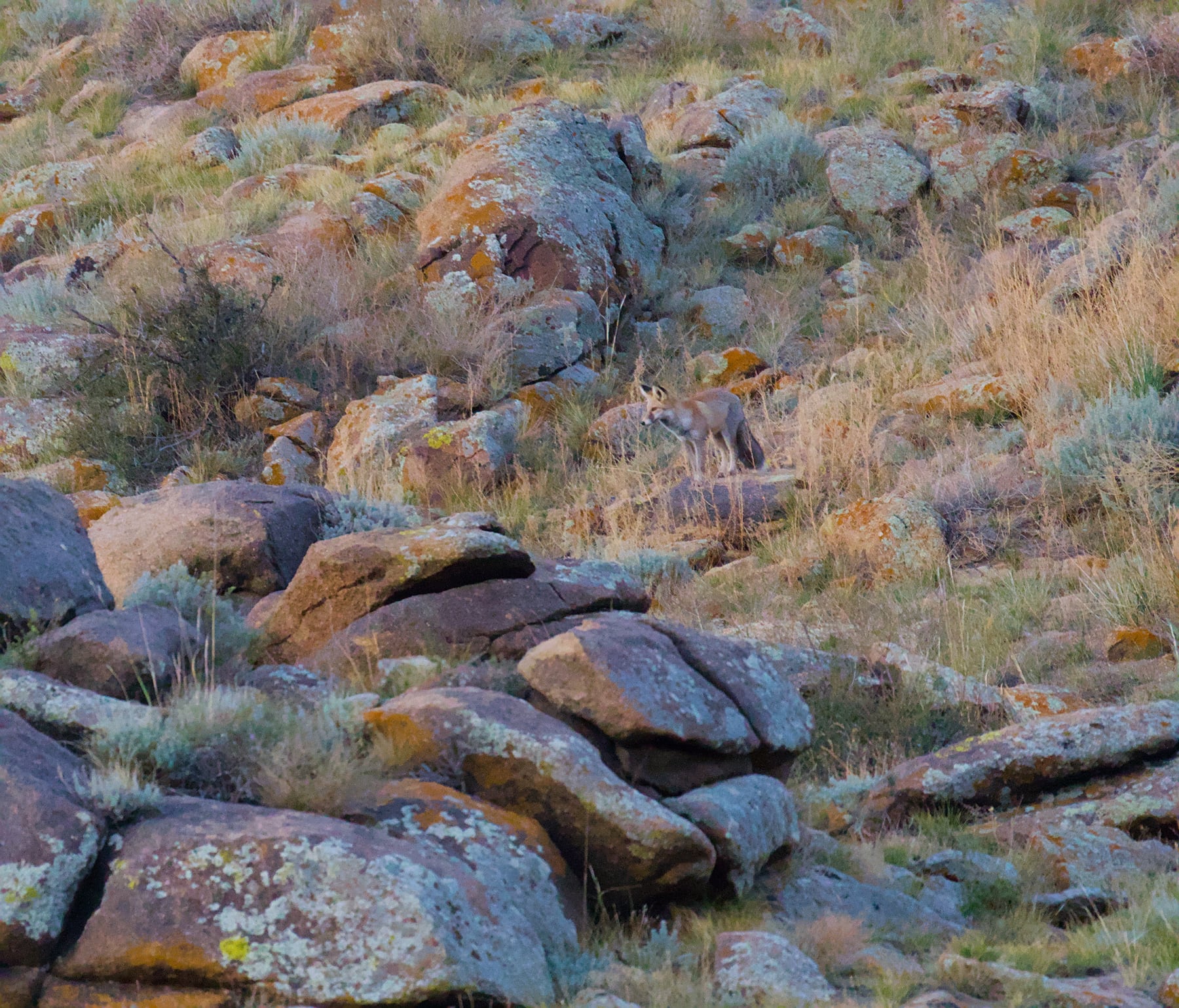
Quiet observation was particularly rewarding in the rocky valleys. Argali could often be found along the ridges, while groups of Siberian Ibex moved between the rocks. Staying quietly near the river also gave us the chance to observe wildlife at closer range. On one morning, a Red Fox came down to the river and passed very close to where we were sitting, seemingly unaware of our presence.
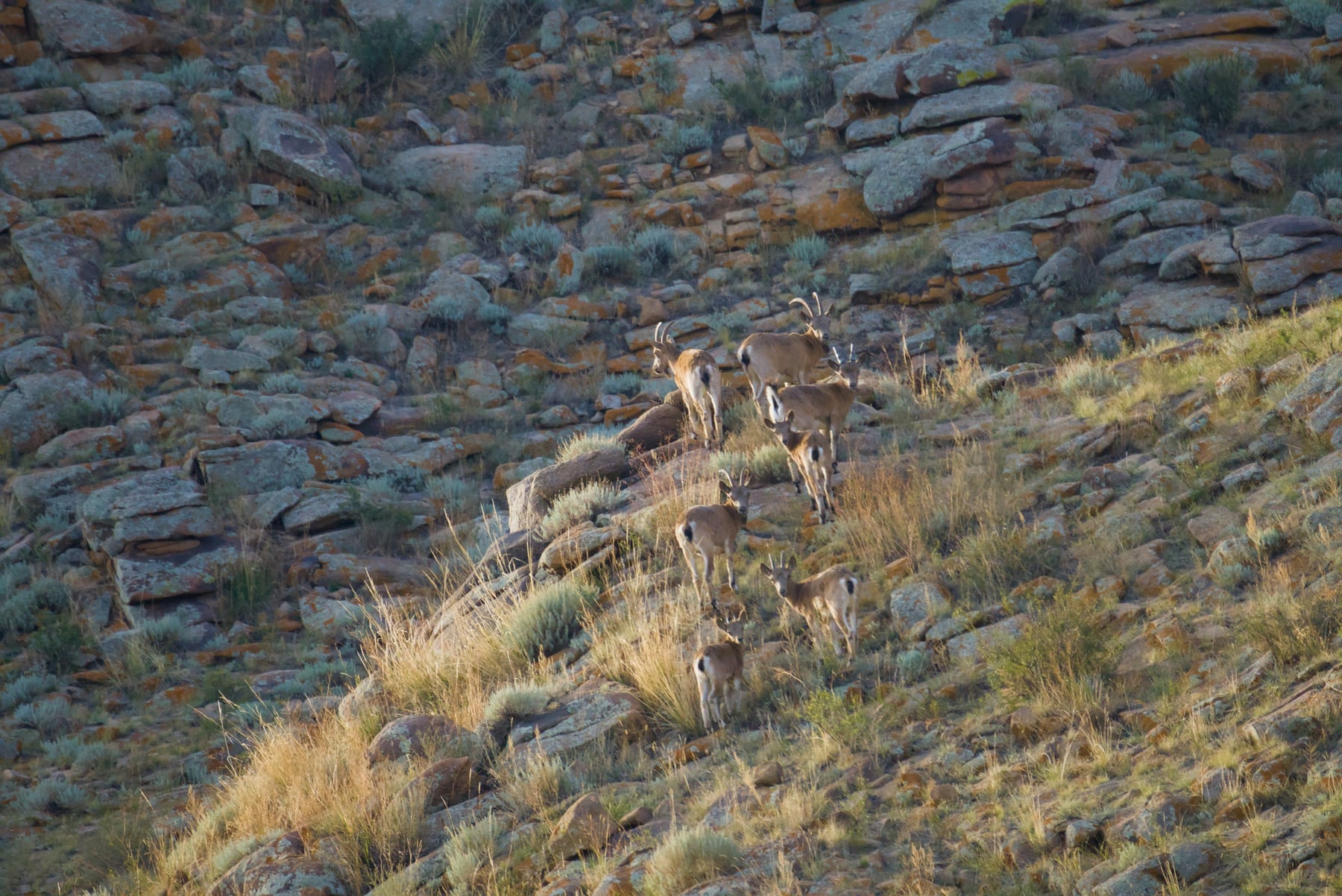
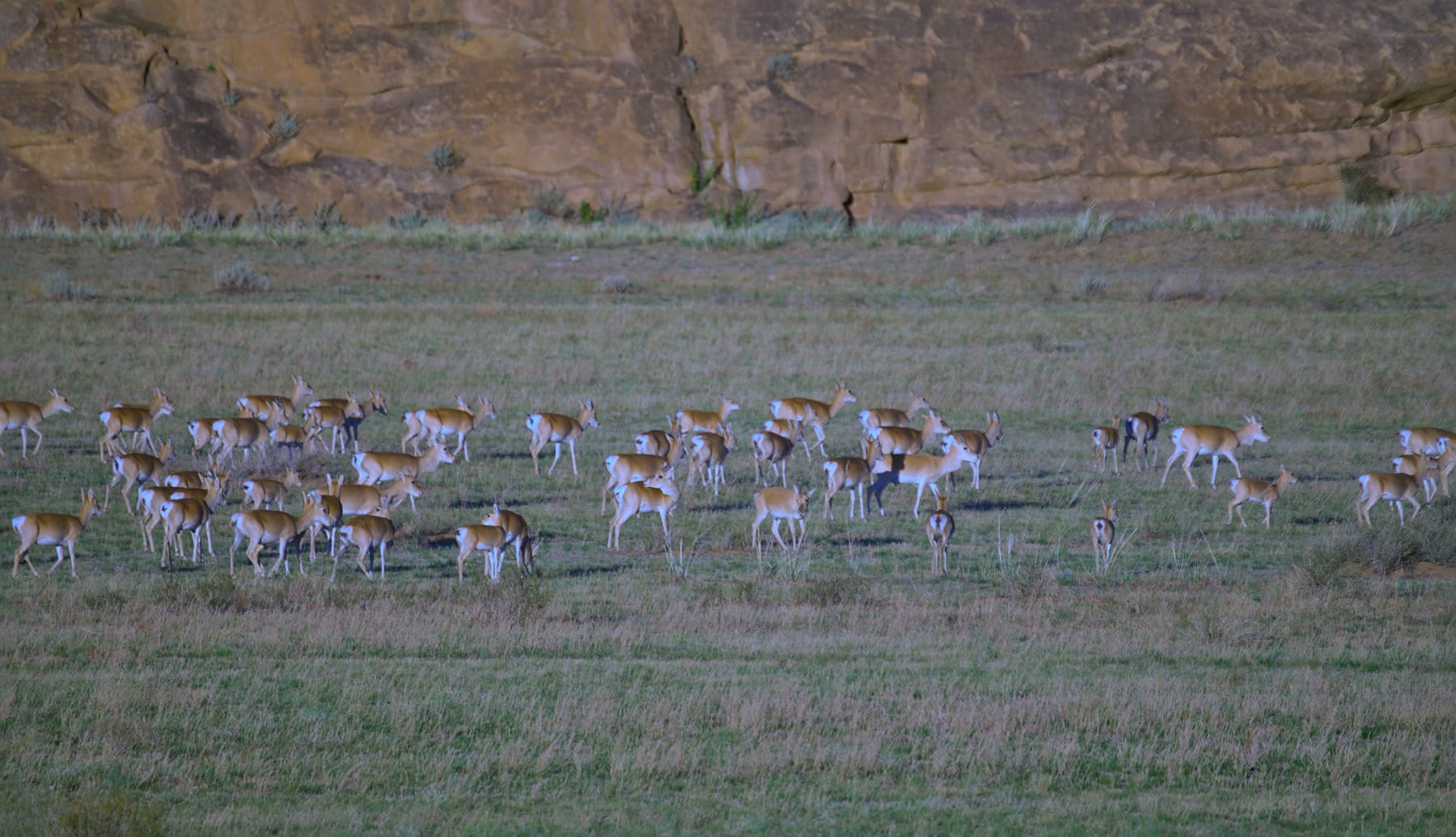
Mongolian Gazelles were present in large numbers across the surrounding steppe, sometimes forming large herds in the distance.
Ikh Gazariin Chuluu
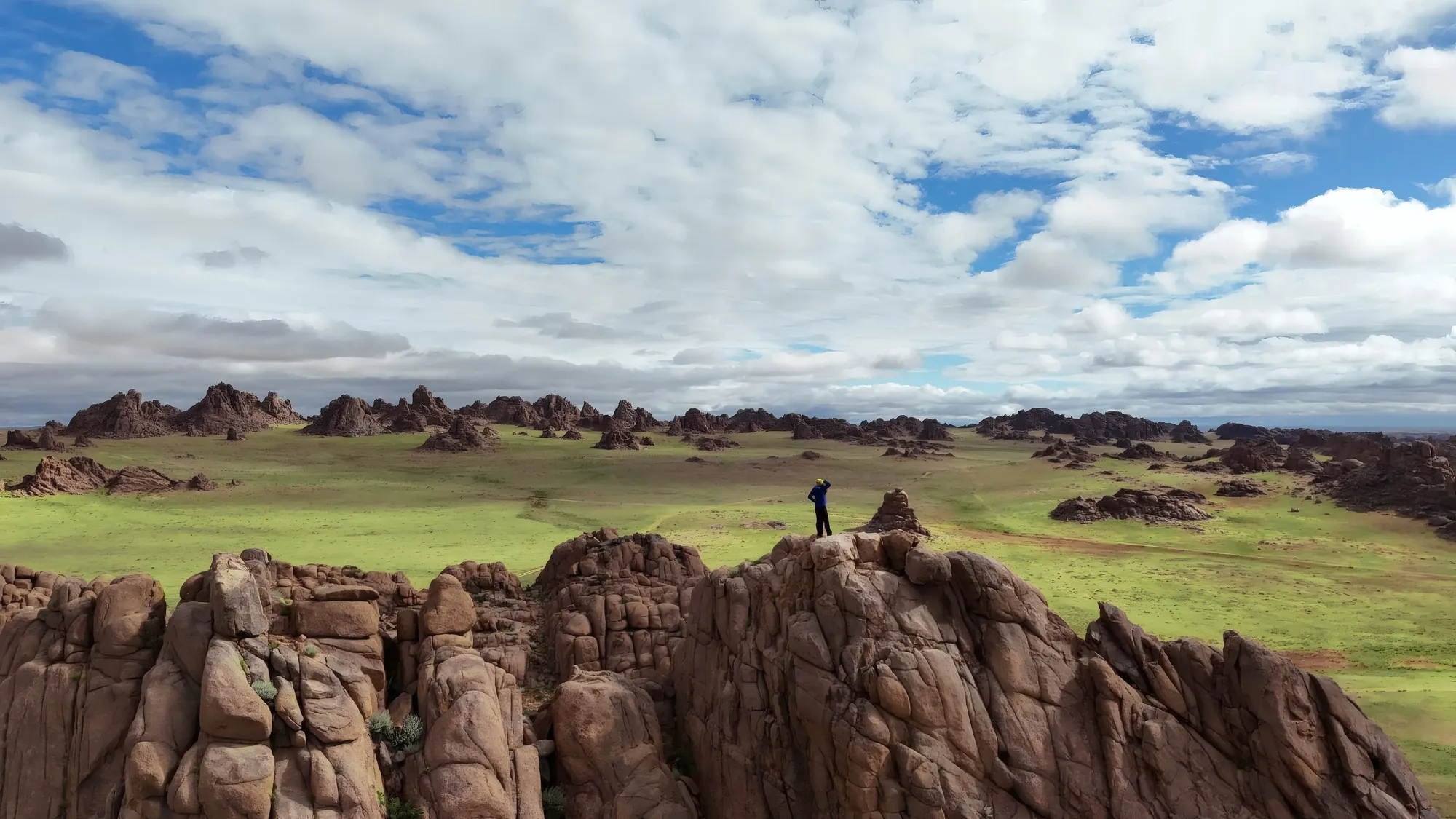
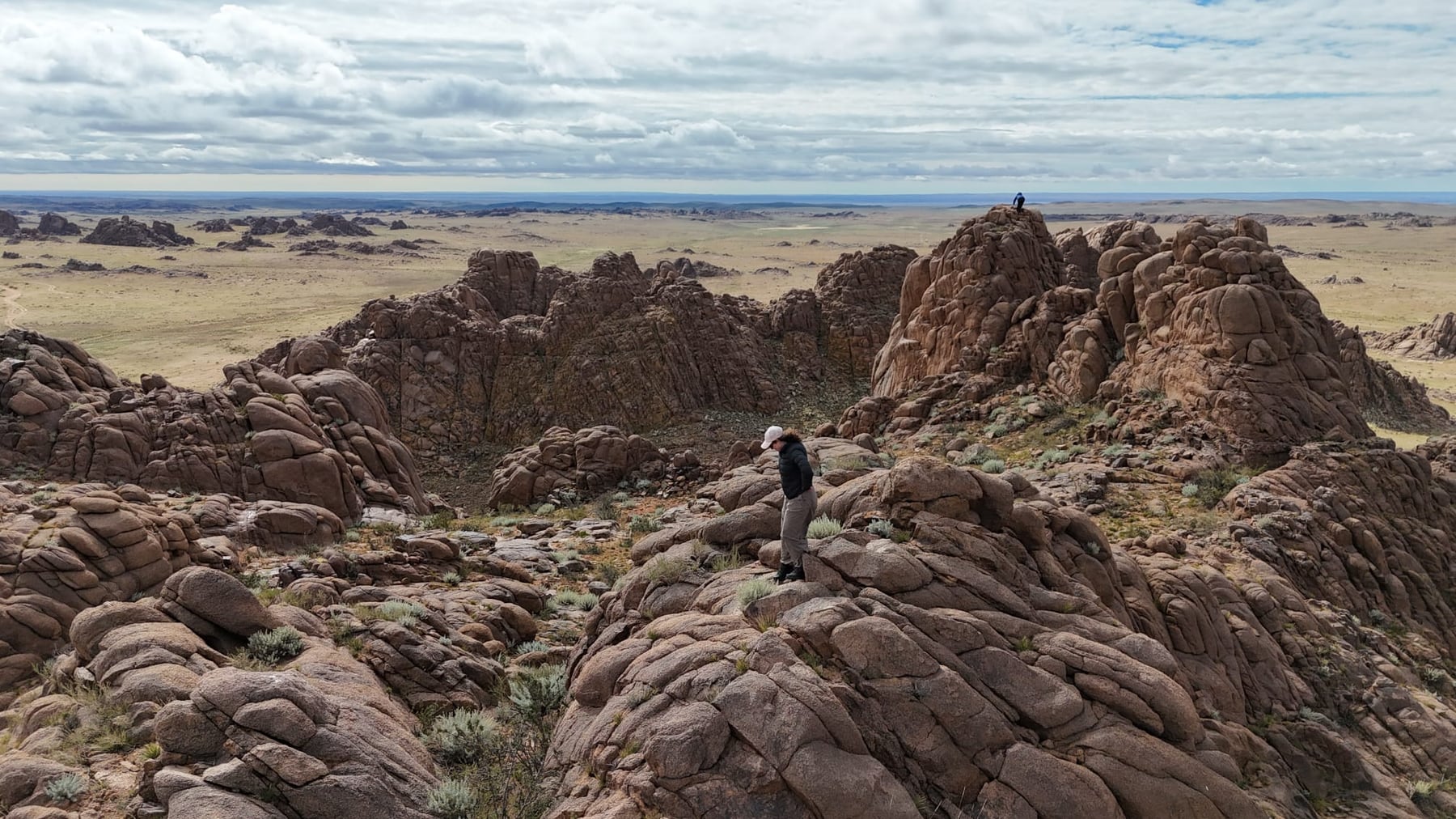
After leaving Ikh Nart, we continued south towards Ikh Gazariin Chuluu. The landscape changes noticeably here, with large granite formations rising from the surrounding steppe. We spent a full day exploring the area and its valleys before continuing towards the Gobi.
The rocks of Ikh Gazariin Chuluu are part of a large granite massif formed deep underground from slowly cooling molten rock. Over millions of years, erosion gradually removed the softer surrounding material and exposed the harder granite, leaving the large rounded outcrops and dramatic formations that can be seen across the landscape today.
As with Ikh Nart, we camped close to the area we wanted to explore. This allowed us to make an early start and spend the cooler morning hours in the field, rather than losing time travelling in from further away.
South towards the Gobi
From Ikh Gazariin Chuluu, we continued south towards Dalanzadgad and the landscapes of the Southern Gobi. The change from steppe to desert was gradual, with open plains giving way to increasingly dry and rocky terrain.
Wildlife remained present throughout the journey. Mongolian Gazelles could be seen at different points along the road, sometimes alone or in small groups and sometimes moving across the open plains. These encounters were never the main destination of the day, but they became a regular part of travelling through the Gobi.
Yolyn Am
Our next major stop was Yolyn Am, a narrow valley in the Gurvan Saikhan Mountains. The cooler, sheltered environment of the valley supports wildlife that can be difficult to find in the surrounding desert.
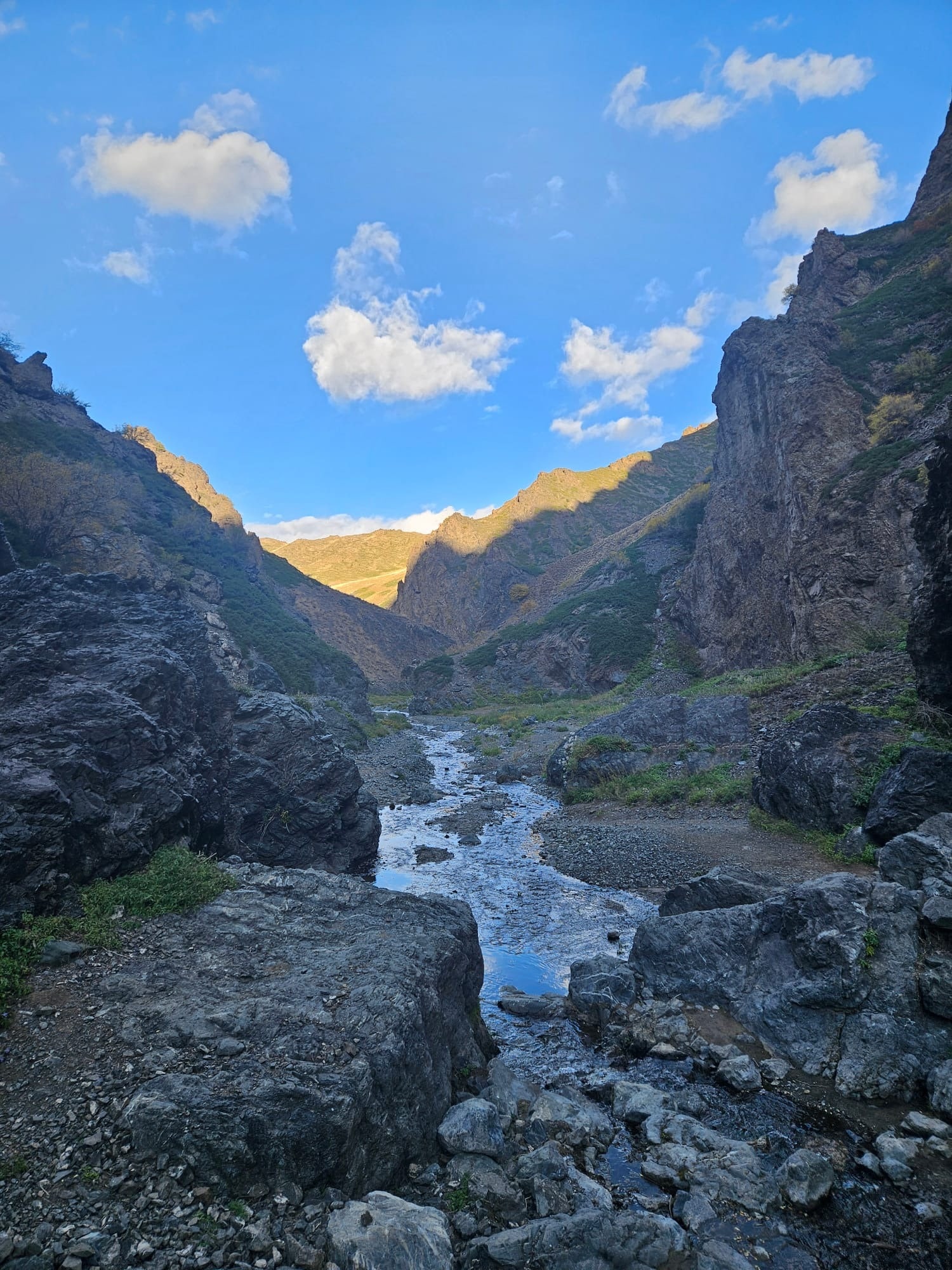
We spent a day walking into the valley and exploring different areas. Siberian Ibex were present among the cliffs, while Pikas could be found around the rocks. Foxes were also encountered, moving through the valley and surrounding slopes.
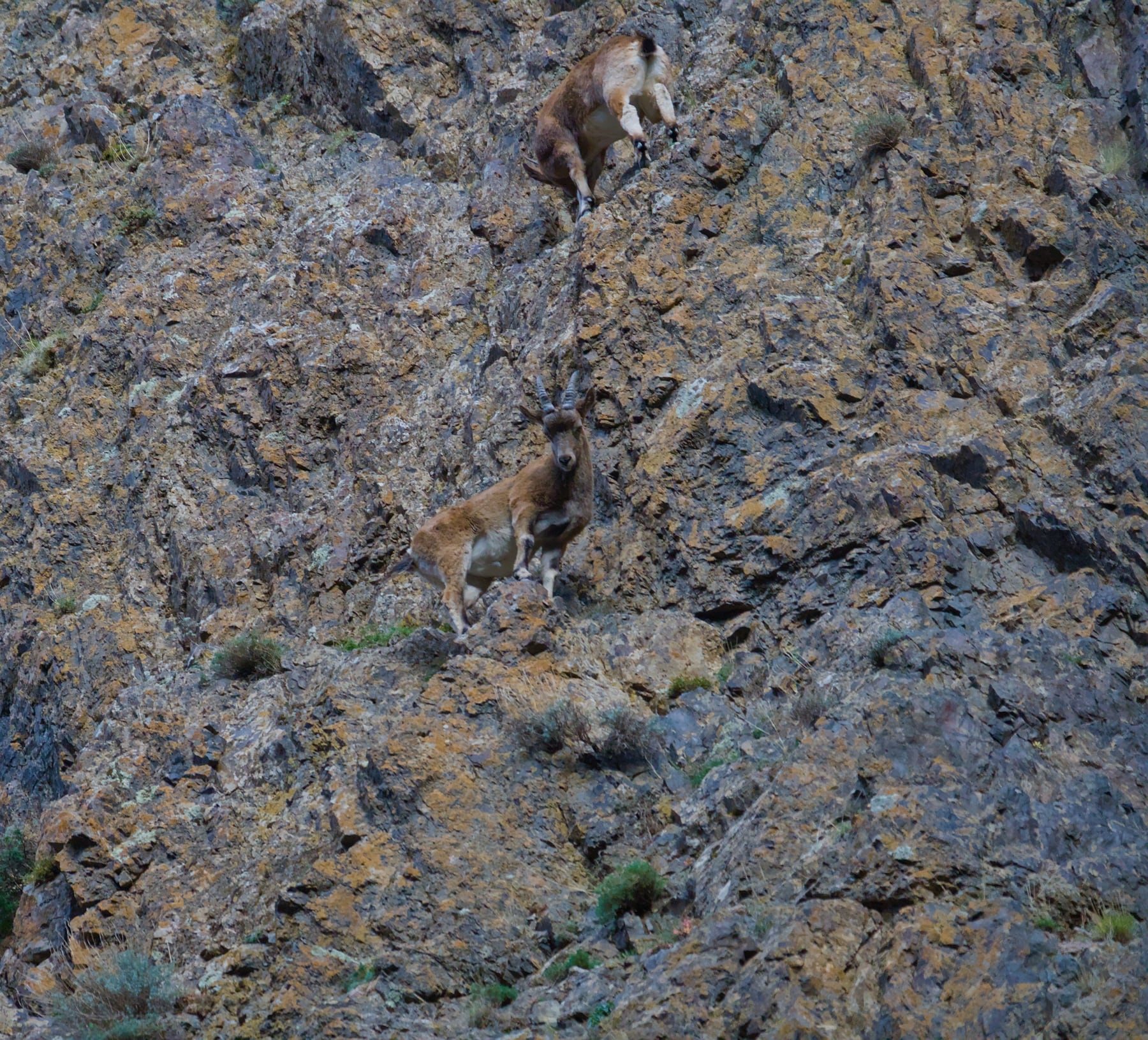
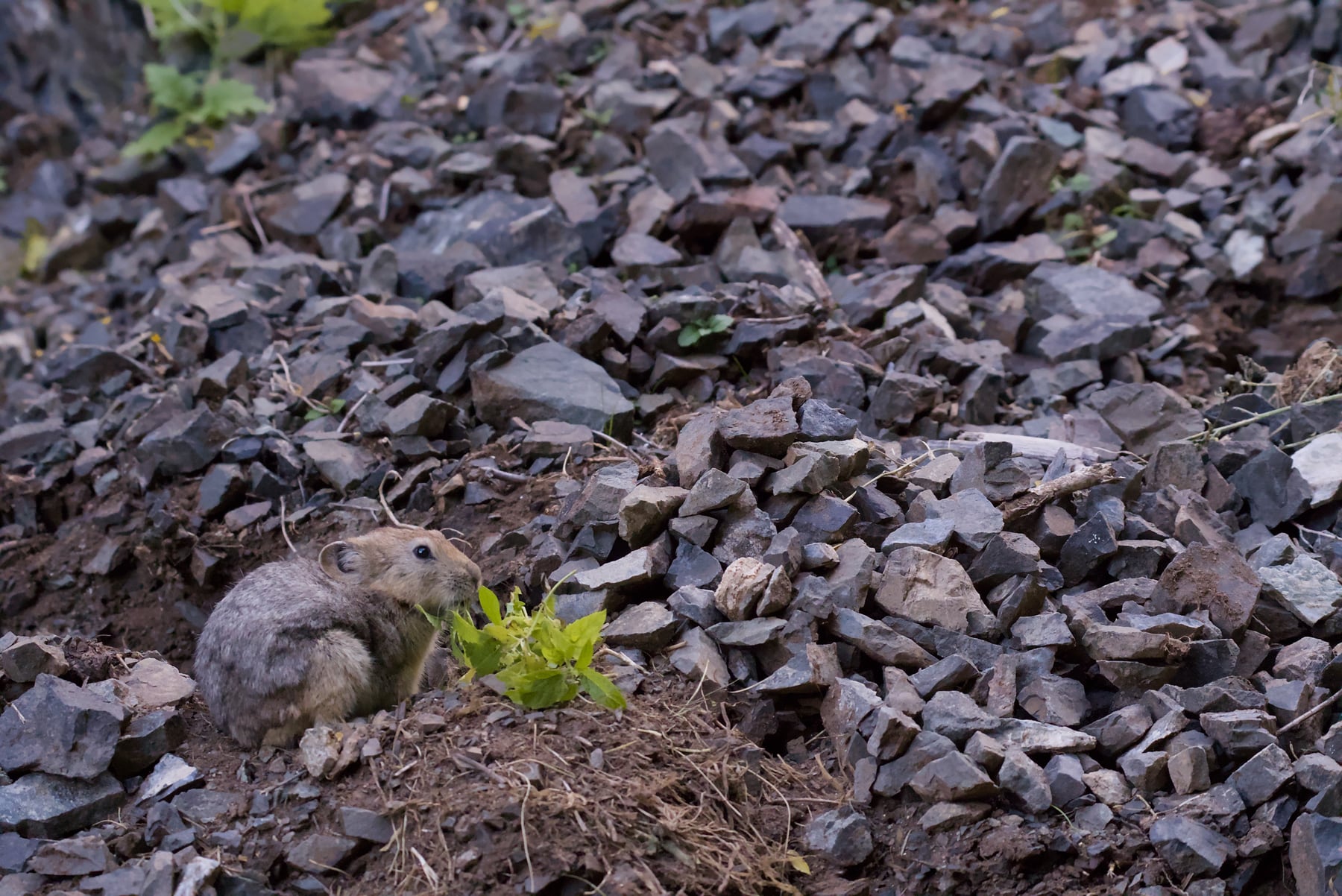
Bearded Vultures were particularly impressive here, regularly seen flying above the cliffs. Other birds were also present throughout the valley, making the area one of the most productive places for wildlife observation on this part of the journey.
Khongoriin Els and Bayanzag
From Yolyn Am, we continued towards Khongoriin Els, one of the largest sand dune systems in Mongolia. The landscape changed again, from rocky mountain valleys to wide desert plains and large fields of sand. We arrived in the afternoon and stayed close to the dunes, taking time to explore the area before continuing east towards Bayanzag.
The journey to Bayanzag took us through open desert and steppe landscapes, where wildlife continued to appear unexpectedly along the way. Mongolian Gazelles were regularly encountered, sometimes crossing the road or moving across the open plains. These sightings became a recurring part of the journey and were a reminder that the Gobi is far from an empty landscape.
At Bayanzag, the scenery changed once again. The red sandstone cliffs and dry valleys stood out strongly against the surrounding plains, creating one of the most distinctive landscapes of the Southern Gobi. After exploring the area, we continued north towards Ongi.
Ongi and the journey north
After leaving the Gobi, we travelled north towards Ongi, where the landscape became more mountainous again. The rocky slopes around the Ongi area provided another opportunity to look for Argali, and we encountered several animals moving between the mountains and ridges. After several days in the desert, seeing Argali again in this different landscape was a good reminder of how widely these animals use the mountain and steppe environments of central Mongolia.
From Ongi, we continued north towards Kharkhorin. The landscape gradually changed once again, from the dry Gobi towards the greener steppe of central Mongolia. The journey through this part of Mongolia also gave us time to slow down after several days of travelling through the Gobi. We continued to camp where possible, keeping the group close to the landscapes we were exploring rather than returning to towns each evening.
Nine days in the field
Throughout the expedition, we deliberately spent as much time as possible camping directly in the landscapes we were visiting. This was not only about the experience of sleeping in the wild. It allowed us to wake up close to the areas where wildlife was active and to be outside during the first hours of the day, when temperatures were lower and animals were generally easier to observe.
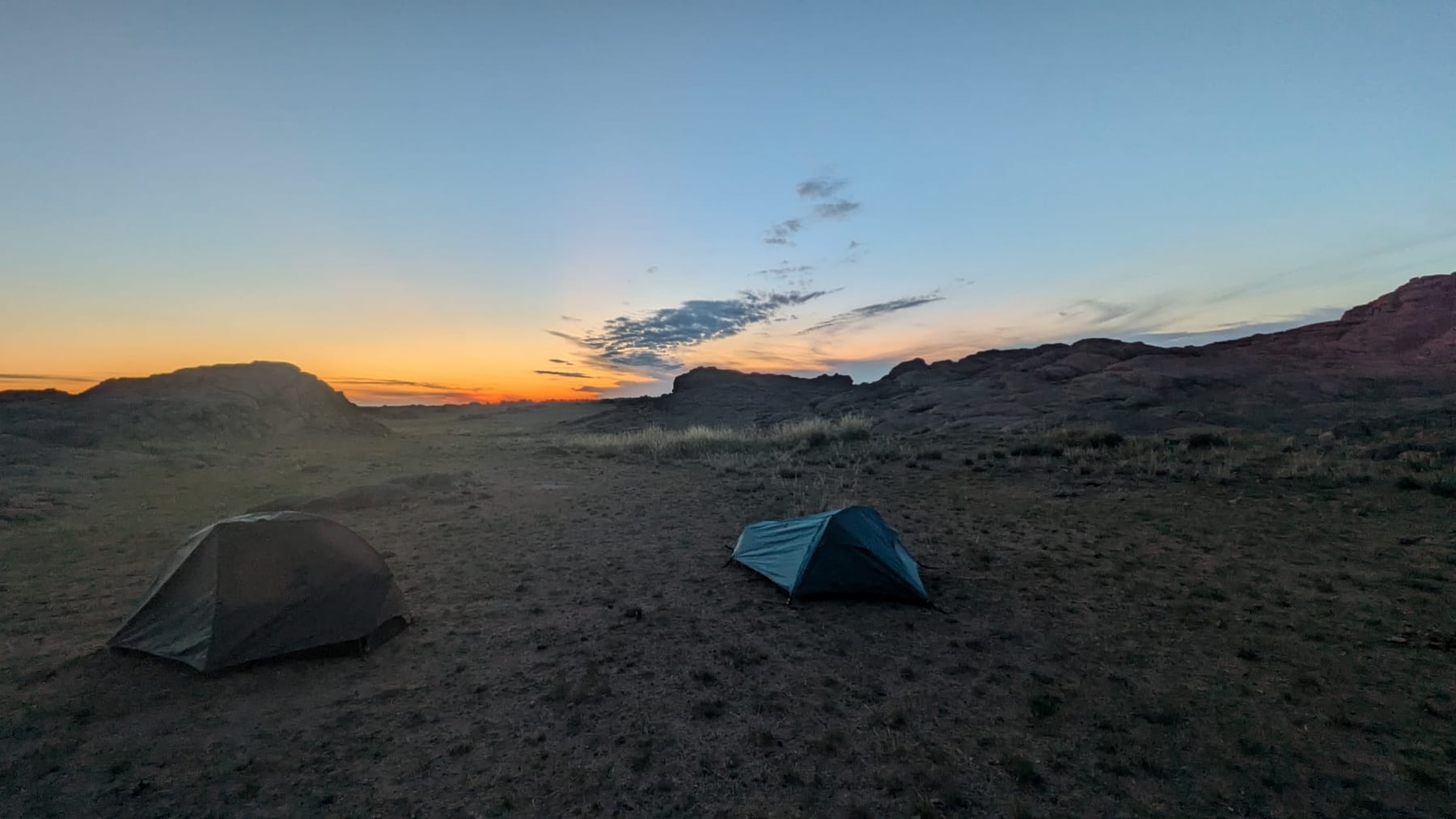
This rhythm was particularly useful in Ikh Nart and around Ikh Gazariin Chuluu, but it also shaped our time in the Gobi. Early mornings gave us the best conditions for walking, scanning the rocky slopes and watching wildlife before the day became warmer.
Over nine days, the journey crossed several very different environments, but the approach remained the same: spend time in the field, move at a steady pace and allow wildlife encounters to happen rather than rushing from one destination to the next.
Species log
Mammals
| Species | Where observed | Notes |
|---|---|---|
| ArgaliOvis ammon | Ikh Nart, Ikh Gazariin Chuluu, Ongi | Observed in rocky areas and mountain slopes. |
| Siberian IbexCapra sibirica | Ikh Nart, Ikh Gazariin Chuluu, Yolyn Am | Particularly associated with rocky valleys and mountain slopes. |
| Mongolian GazelleProcapra gutturosa | Ikh Nart and throughout the route | Seen regularly across the open steppe and desert landscapes. |
| Red FoxVulpes vulpes | Ikh Nart, Yolyn Am | Encountered in several different habitats. |
| Corsac FoxVulpes corsac | Ikh Nart | Observed around rocky and open areas. |
| Tolai HareLepus tolai | Ikh Nart | Usually encountered around low vegetation and rocky areas. |
| Pika | Yolyn Am | Found among the rocks in the valley. |
Birds
| Species | Where observed | Notes |
|---|---|---|
| Bearded VultureGypaetus barbatus | Ikh Nart, Yolyn Am | Regularly observed above rocky and mountainous areas. |
| Cinereous VultureAegypius monachus | Ikh Nart and elsewhere | Frequently seen soaring above the landscape. |
| Other raptors and steppe birds | Several locations | A variety of species observed throughout the journey. |
Photographs
Two argali rams on a granite outcrop at Ikh Nart, at dusk. A bird of prey on a rocky outcrop at Ikh Nart. A corsac fox on the stony steppe at Ikh Nart, as a flock of birds takes off. The ridges of the Gurvan Saikhan Mountains, above Yolyn Am. A grey wagtail along the stream at Yolyn Am. A gerbil at the edge of the scrub, near Yolyn Am.