
Field report · Ikh Nart Expedition
Exploring Ikh Nart — Wildlife, Research and Conservation — Ikh Nart, September 2026
From 17th to 20th September, members of the Artus team spent four days in Ikh Nart Nature Reserve. We had heard about an Argali monitoring programme taking place in Ikh Nart and decided to visit during the fieldwork to meet the researchers, learn more about their work and understand what they are hoping to achieve through the project.
- Departure
- 17 September 2026
- Region
- Ikh Nart Nature Reserve, Dornogovi
- Duration
- 4 days
- Group
- Artus team
- Weather
- Rainy and cloudy on the first day, sunny every other day
Route — Ulaanbaatar · Ikh Nart Nature Reserve · Ulaanbaatar. One night camping in the reserve, two nights at the research center
Arriving in Ikh Nart
We left Ulaanbaatar on the morning of September 17th and travelled south-east towards Ikh Nart. This visit was organised as a field trip for the Artus team. We wanted to spend time in the reserve and, in particular, meet the researchers carrying out ongoing work on Argali and other wildlife of Ikh Nart.
The researchers were already in the field when we arrived. We had the opportunity to see them carrying out one part of their work: capturing Argali using drive nets and fitting them with satellite tracking collars. These collars allow them to follow individual animals over time and study their movements, reproduction and mortality.
Spending time with the researchers gave us the opportunity to learn more about their work and the wider questions behind the monitoring programme. It also gave us a first-hand look at how wildlife research is carried out in the reserve.
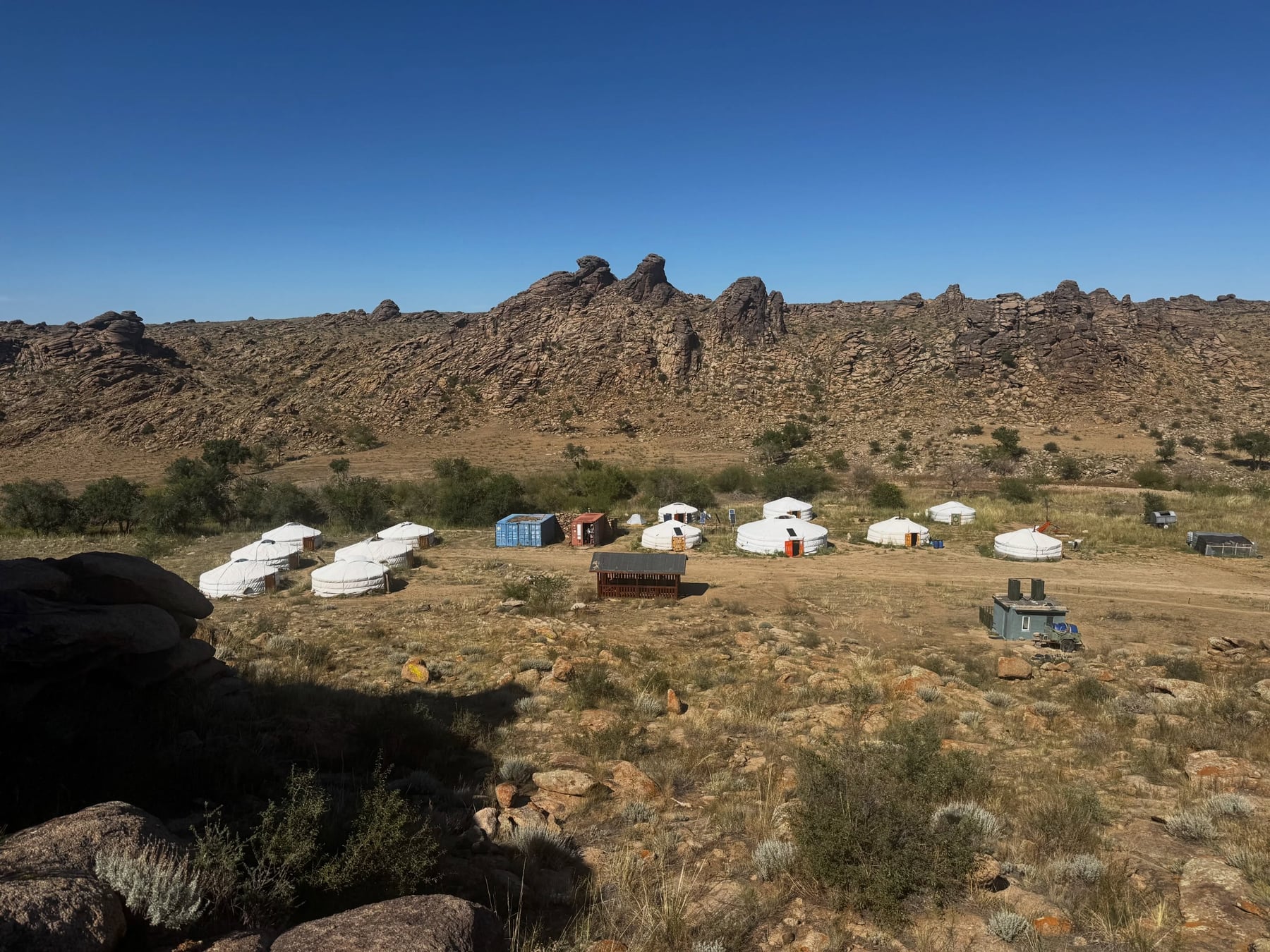
The research centre’s gers were fully occupied by the researchers, so we set up camp inside the reserve for the night.
The researchers left the following day, while we remained in the reserve to continue exploring the area and observing its wildlife. The rest of our stay gave us the opportunity to experience Ikh Nart in the field ourselves, moving through different valleys and rocky areas and learning more about where and how wildlife uses the landscape.
The research programme
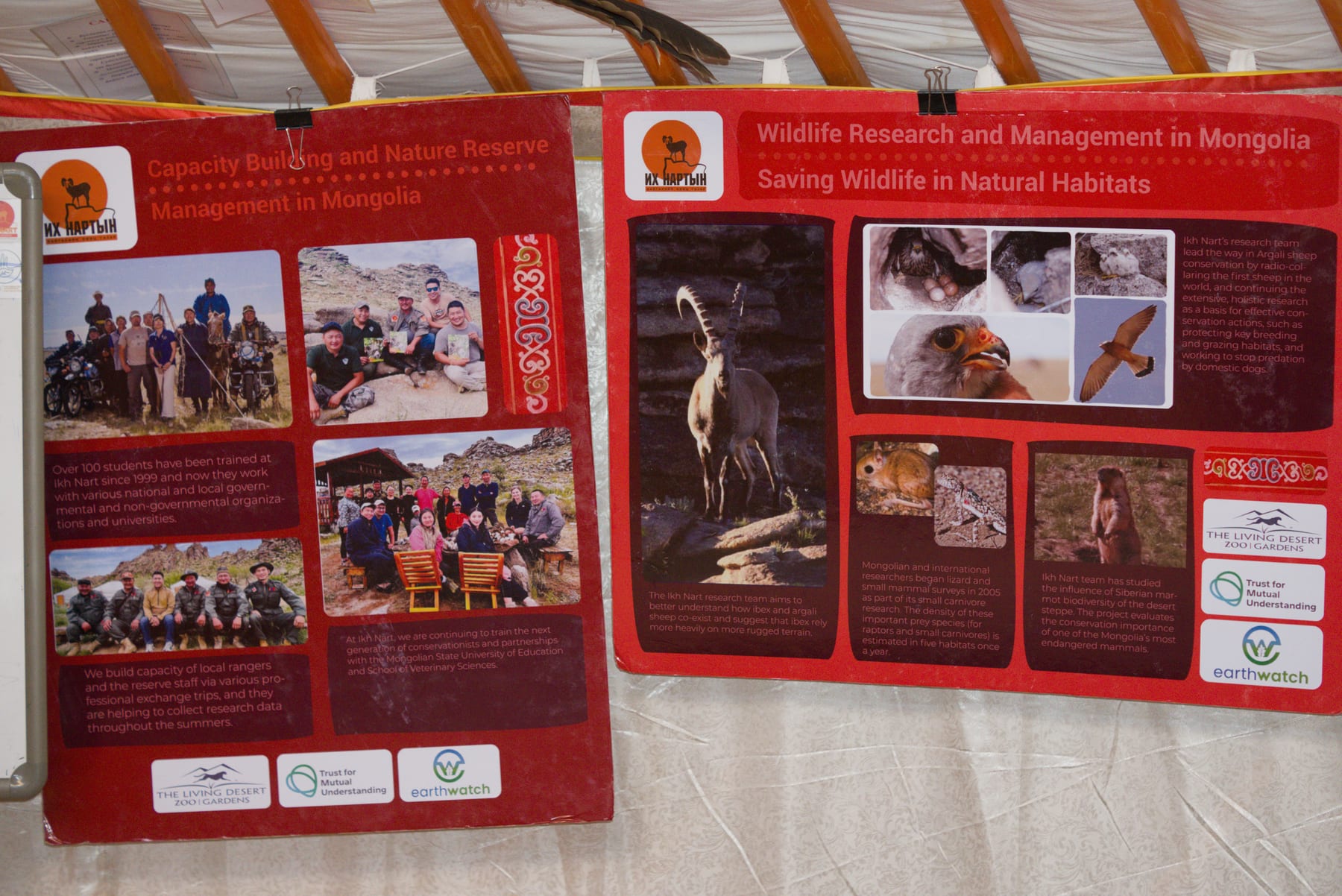
The work we learned about in Ikh Nart covers much more than Argali. Researchers walk 5-kilometre transects to count Argali and Siberian Ibex, monitor raptor nests and place wing tags on young Cinereous Vultures. They also monitor 50 vegetation plots and trap small mammals as part of their broader ecological work.
A major part of the research focuses on how different species use and share the landscape. Among the questions being studied are how Argali and Siberian Ibex share their habitat, what impact domestic sheep and goats have on wildlife, and how Goitered Gazelles and domestic camels coexist in the same landscape. The team also contributes to training Mongolian students directly in the field, passing on practical experience in wildlife monitoring and research.
The research programme is continuing through 2027, with three main priorities: monitoring and preventing poaching, understanding water availability, and studying how wildlife and domestic livestock share the available pasture. These questions are particularly relevant in a reserve where wildlife and around 150 herder families live alongside each other, and where access to water and grazing areas can influence how different species use the landscape.
The long-term nature of this work is what makes the research particularly valuable. By monitoring wildlife, vegetation, water and human activity over time, researchers can build a better understanding of how the different elements of the reserve interact and how its wildlife populations can be protected.
A conservation success story
The research and conservation work at Ikh Nart has also produced significant results over the years. Poaching has been almost completely eliminated, in part through a ranger programme that involves people from the local herding communities. The approach has helped create a stronger connection between wildlife protection and the people living within the reserve.
Argali and Siberian Ibex populations have increased by an estimated 200–300%, at a time when both species are declining in many other parts of Mongolia. Ikh Nart has consequently become a source population for Argali, with animals dispersing from the reserve and helping re-establish smaller populations in neighbouring areas.
In 2012, the United Nations Development Programme designated Ikh Nart as a “Model Protected Area”, recognising the reserve as an example of how research, active conservation, local communities and protected-area management can work together.
The reserve is also home to around 150 herder families, making the relationship between conservation and local livelihoods an important part of its management.
Early mornings in the field
Each morning started early, with a 5:15 am wake-up before walking quietly along the river to reach a good position for observation. We would then stay for around 2 hours, completely silent and using the rocks as natural cover.
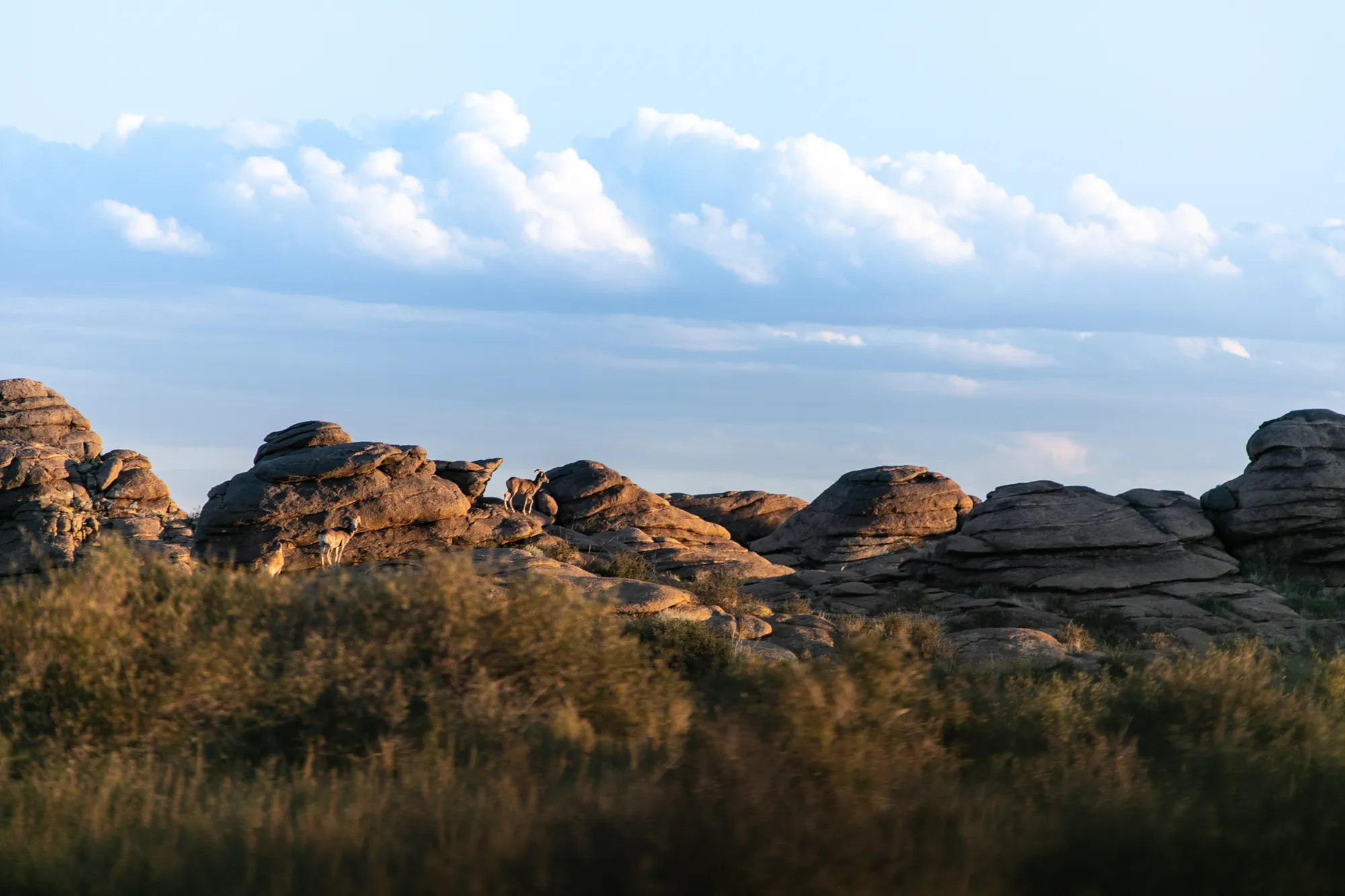
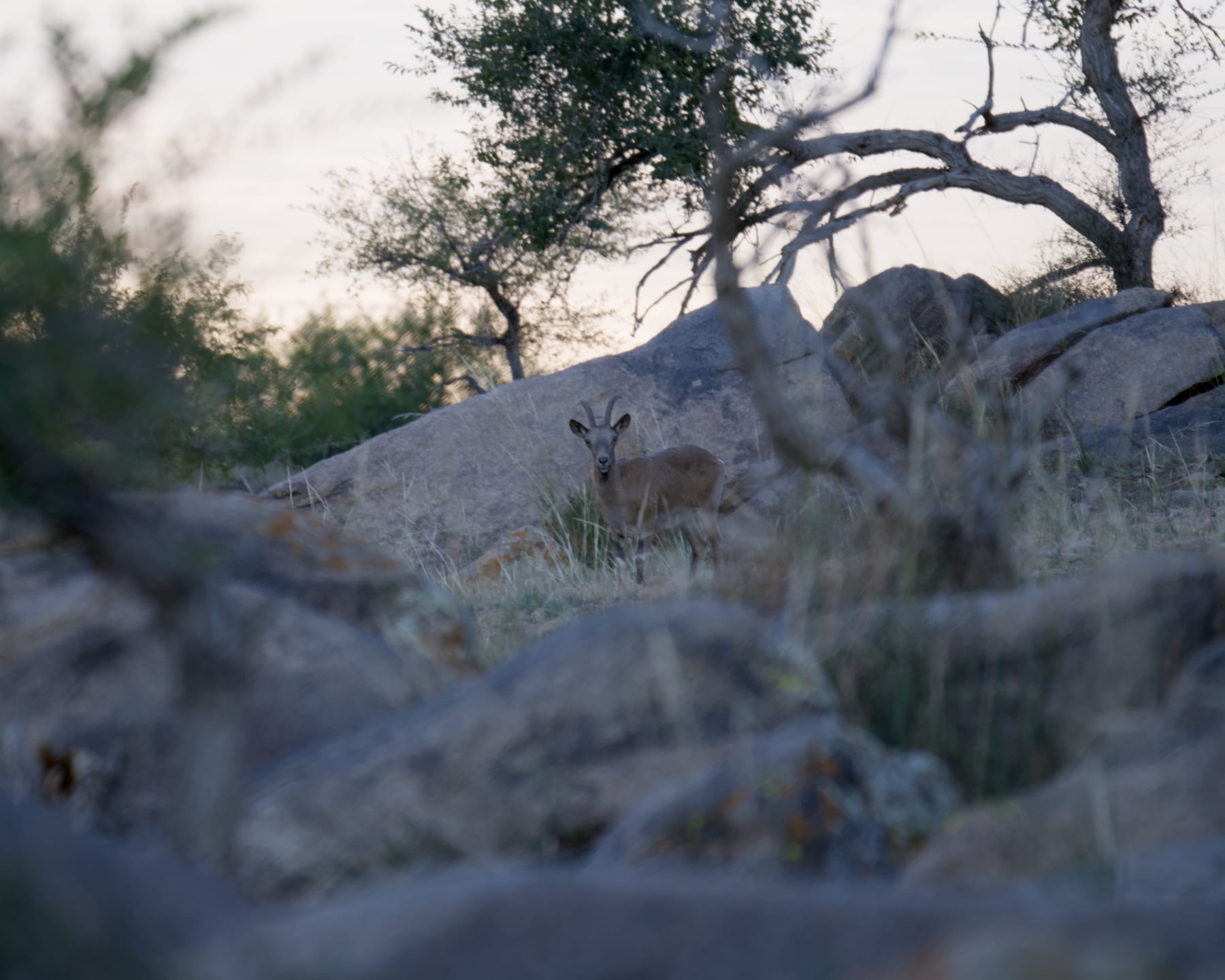
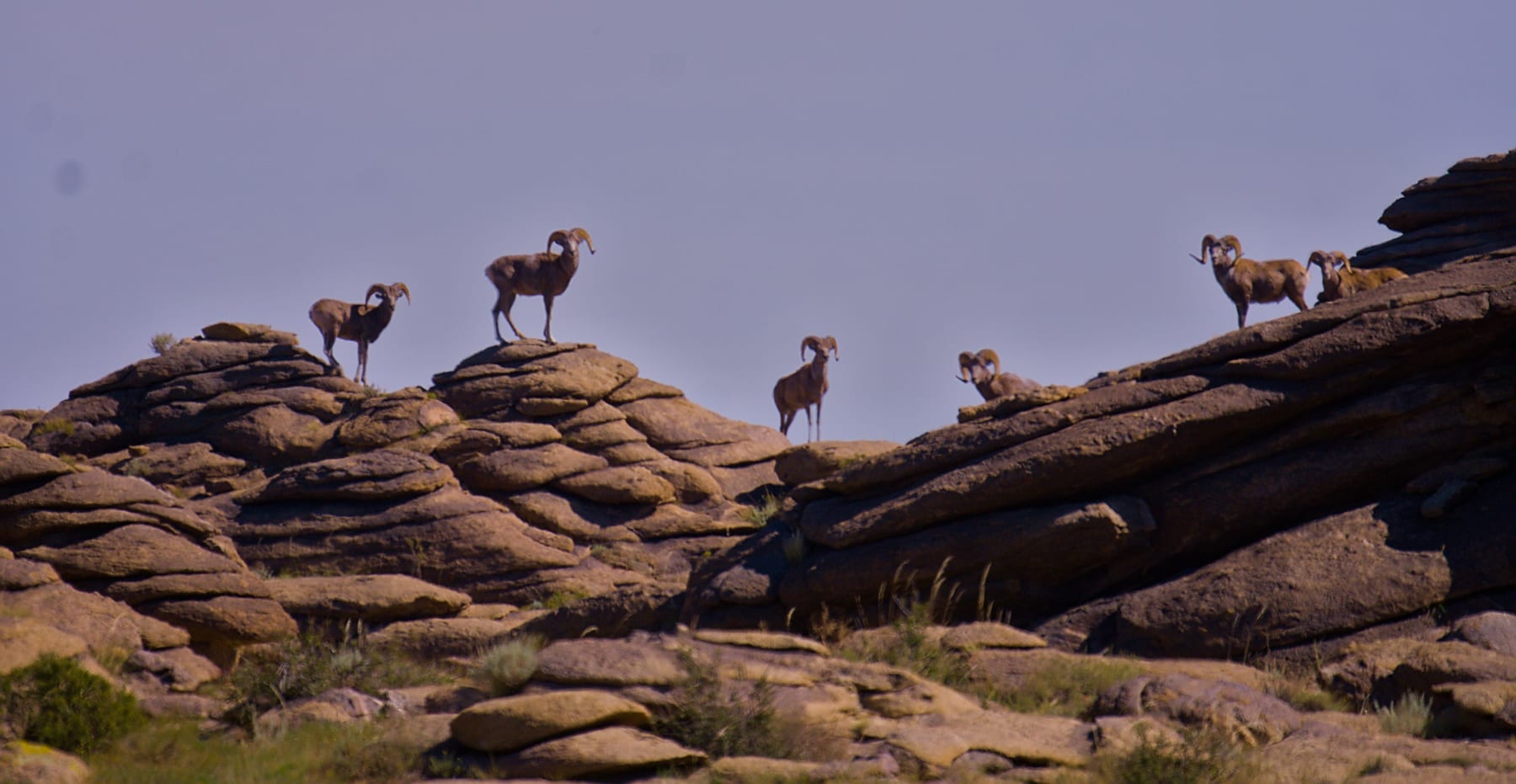
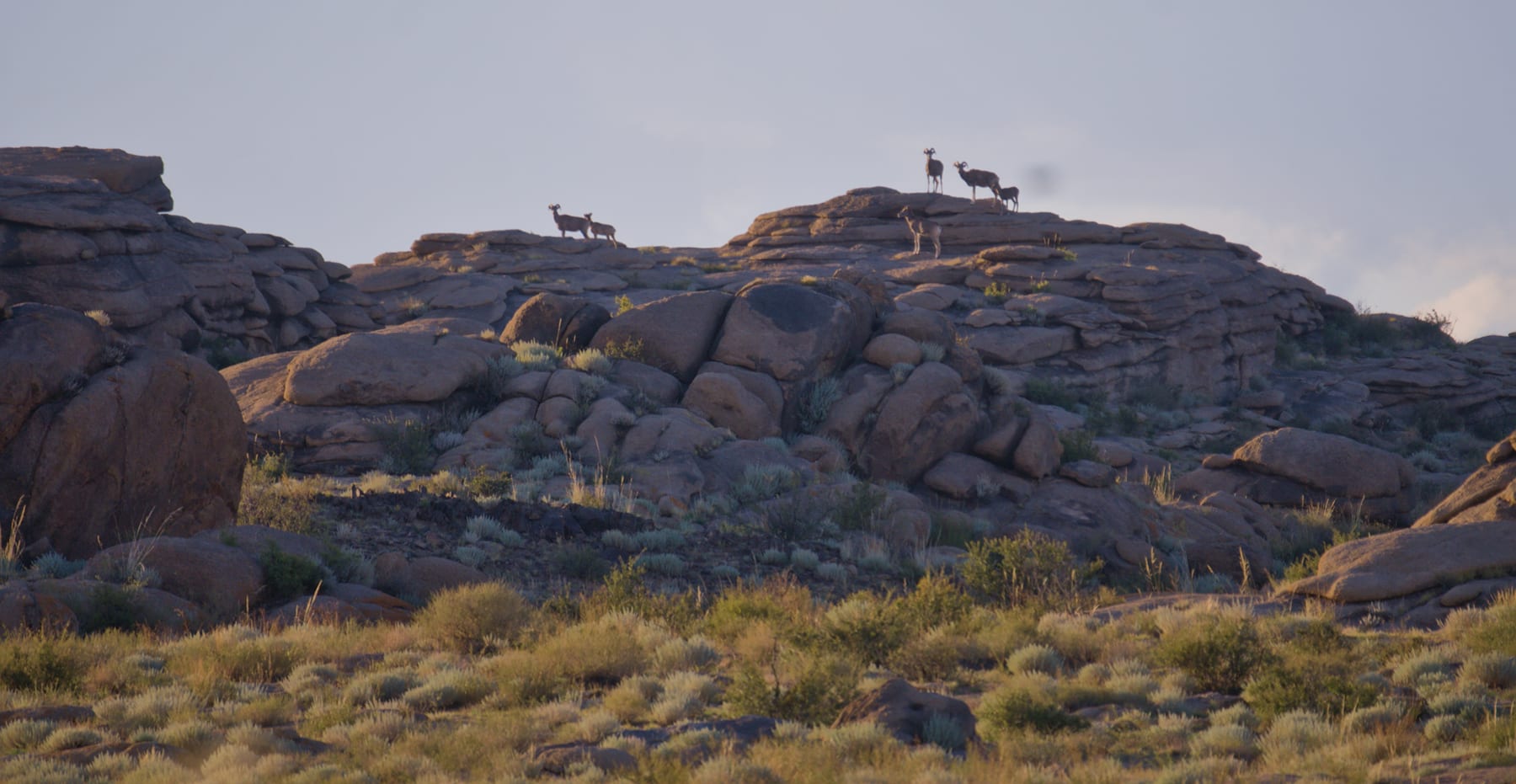
This patience paid off. On the first morning, we spotted a pair of argali on the ridges above us, while a family of ibex was grazing closer to the river. We also encountered a red fox near the river, although it moved away before we could get a photograph.
The early hours were consistently the most active part of the day. The mornings were about choosing a good position, remaining still and letting the wildlife move through the landscape.
Exploring the valleys
After returning to camp for breakfast and some rest, we generally headed out again around 12 pm. September is cooler than the summer months, making it possible to continue exploring during the middle of the day.
There are several valleys and rocky areas to explore in the Reserve. Most require moving quietly between the rocks and stopping regularly to scan around. The landscape can appear empty at first, but careful observation often reveals animals resting or moving between the rocks.
During the warmer part of the day, we observe carefully shaded areas and sheltered corners. Animals can spend more time resting there, making them harder to find.
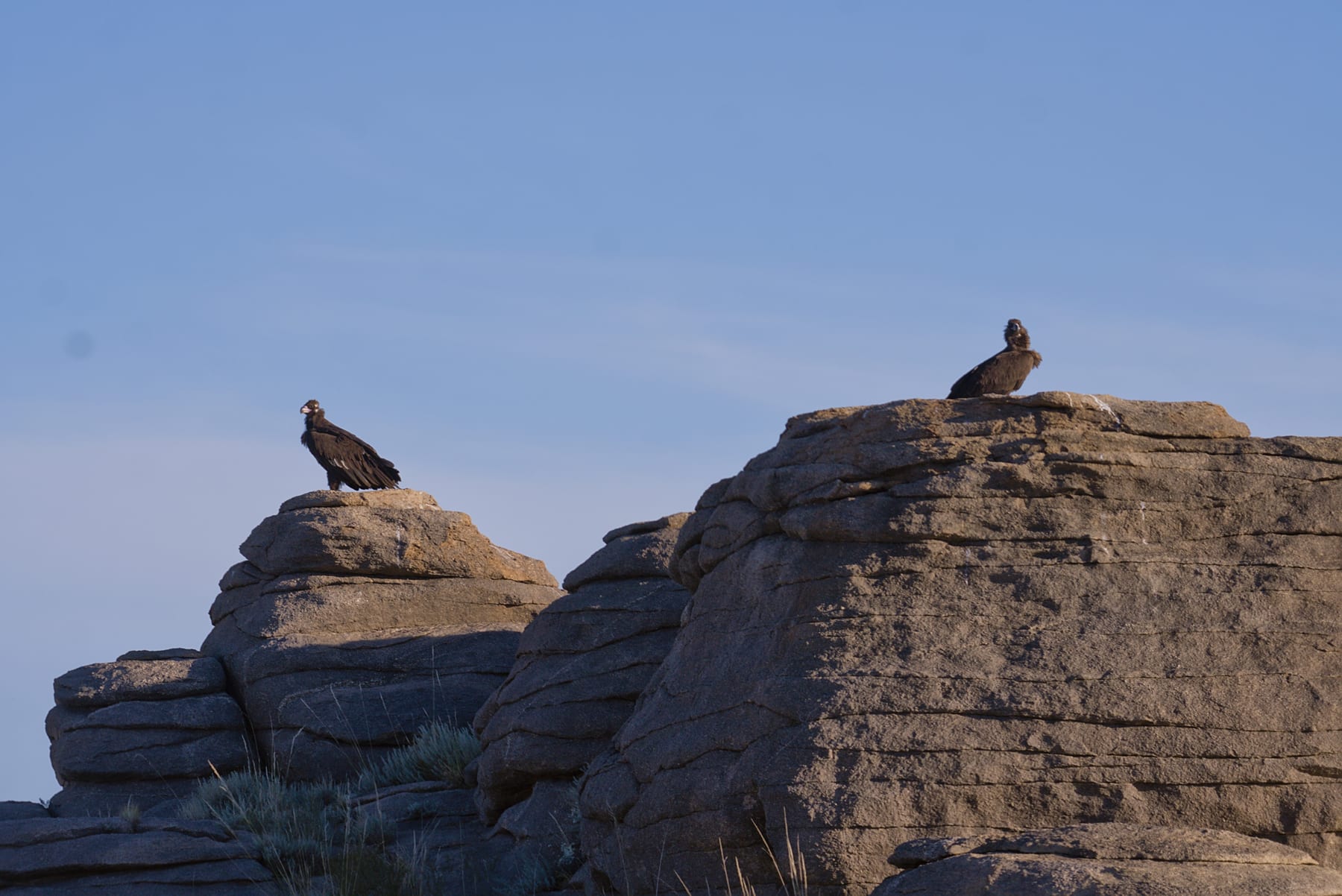
Vultures were also regularly present throughout the reserve, usually resting at the top of a ridge or in a nest.
Gazelles across the steppe
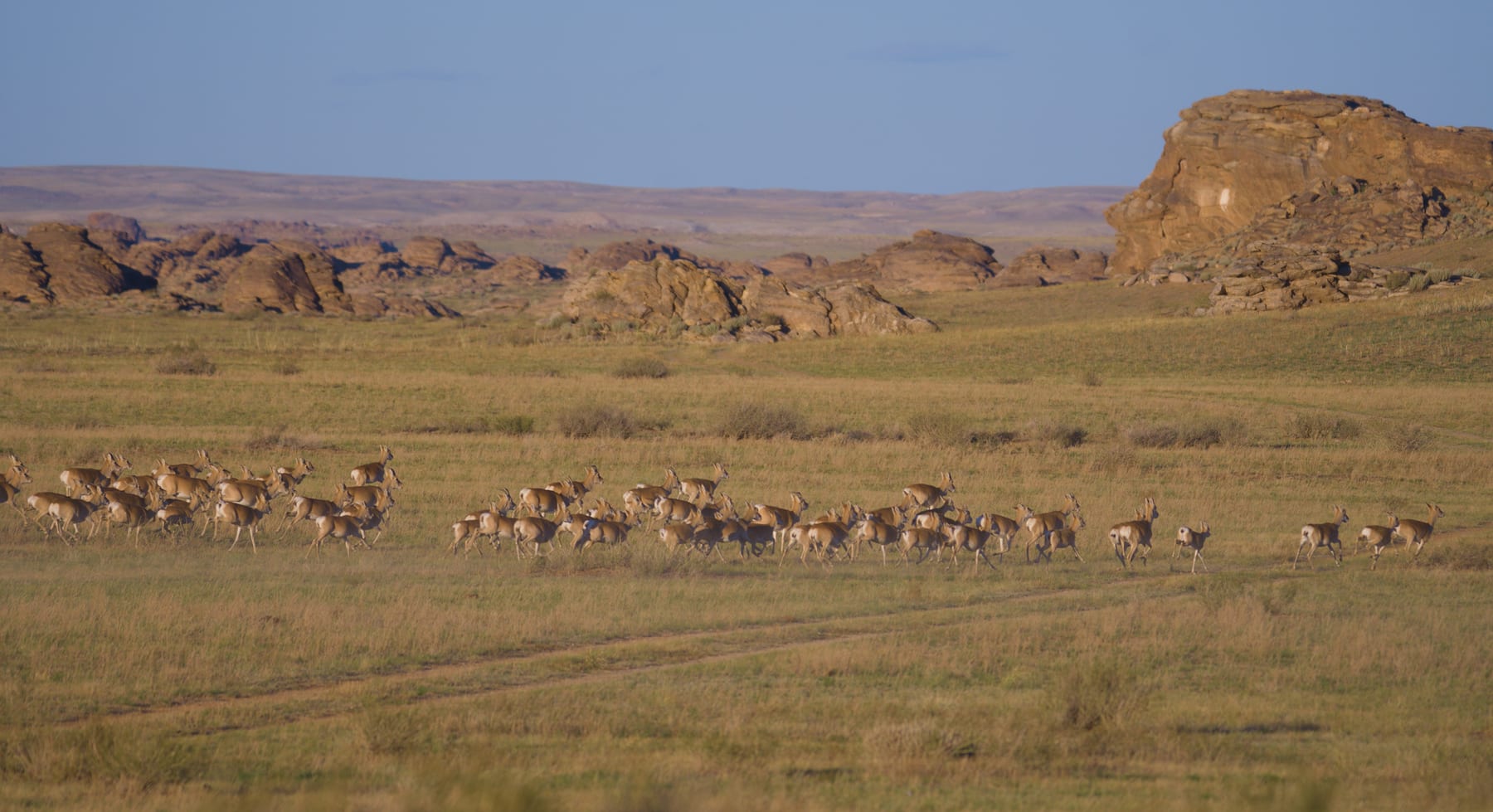
One of the most impressive wildlife encounters at Ikh Nart was seeing the large number of Mongolian gazelles. Large herds roam around the open steppe, with groups ranging from several hundred to a thousand animals. Goitered gazelles are also present, generally encountered in much smaller groups.
Mongolian gazelles are primarily associated with the steppe, while goitered gazelles are a desert species. The presence of both species reflects the particular position of Ikh Nart, at a transition between the northern steppe and the more desert-like landscapes further south.
Species observed
The most regularly encountered large mammals were Mongolian gazelles, ibex and argali. The gazelles were particularly numerous across the open steppe, while argali and ibex were more closely associated with the rocky areas.
Foxes were more difficult to find and required greater attention while moving through the reserve. We observed both red fox and Corsac fox during the expedition, although not every sighting allowed time for photography.
The birdlife was also a constant presence. Cinereous and Bearded Vultures could be seen above the valleys and ridges, while Daurian Partridges were encountered closer to the ground among the rocky areas.
Conclusion - Four days in the field
Four days gave the Artus team enough time to settle into the rhythm of Ikh Nart and to explore several parts of the reserve after our time with the researchers. The days were deliberately kept flexible, allowing us to follow the conditions in the field rather than a fixed itinerary. Early morning observation, walks through the rocky valleys and longer afternoon drives gave us time to explore different parts of the reserve and build a better understanding of the landscape.
The landscape rewards patience. Some areas can appear completely empty until an argali becomes visible on a distant ridge or a small group of ibex emerges between the rocks.
The September conditions were also well suited to this rhythm. The cooler temperatures compared with summer allowed us to remain active during the middle of the day, while the early mornings provided the best conditions for quiet observation.
For Artus, meeting researchers and spending time in the field is an important part of understanding the places where we work. Our visit to Ikh Nart gave us the opportunity to learn more about the reserve’s Argali population, the wider monitoring programme and the questions researchers are trying to answer about wildlife and its relationship with the landscape. It also helped us better understand how future Artus expeditions in the reserve could connect travellers with the wildlife, landscape and ongoing conservation work.
Species log
Seen
| Species | Count | Notes |
|---|---|---|
| ArgaliOvis ammon | 20–25 | Usually seen in groups of around 6–8 animals, sometimes in pairs. They stay close to the rocky areas and can often be spotted with just their heads appearing above the ridges. |
| Siberian IbexCapra sibirica | 15 | Often in a group of 4–5, little ones playing around the rocks. |
| Mongolian GazelleProcapra gutturosa | Hundreds | Large herds of hundreds of gazelle, easily seen in the steppe area, south of the Reserve. |
| Goitered GazelleGazella subgutturosa | 2 | Less common than the Mongolian gazelle, stays in small groups of 6–8. It is a desert species. |
| Red FoxVulpes vulpes | 4 | Easier seen than its cousin the corsac, usually goes out early morning or at/after sunset. |
| Tolai HareLepus tolai | 5–6 | They usually see you before you see them, and all that you see is a very fast hare running away. Likes to hide underneath small bushes. |
| Daurian PartridgePerdix dauurica | 8–10 | Small groups of 6–8 birds in the more sandy areas of the reserve. |
| Cinereous VultureAegypius monachus | Many | A lot across the reserve, and many individuals are monitored and studied by the research centre. |
| Bearded VultureGypaetus barbatus | 1 | A few individuals, rare to see. Easy to recognise with its white belly, very different from the other birds of the reserve. |
| Corsac FoxVulpes corsac | 1 | Small and sand-coloured, usually stays around the rocks where they can find easy shelter. Hard to approach. |
Photographs
Mongolian gazelles running below the outcrops, on the first evening. A herd crossing a grassy slope, close enough to count. Siberian ibex on the ledges of a granite cliff. The entrance sign of the Ikh Nart research camp. Two argali rams on a granite outcrop. Siberian ibex climbing down a rocky slope, early in the morning.