Coming to Mongolia
What you will want to know first
The practical part : flights, weather, what to bring, what to expect, and what we organise for you once you land in Mongolia.
When to come
- The country sits high
- around 1,580 m on average, bringing big temperature shifts between day and night
- July
- warm across most of Mongolia, often reaching 30 °C or more in the South Gobi
- May, September & October
- quieter months, often with excellent light — expect colder nights and frost from September
- November to March
- the main season for many of our snow leopard expeditions
- Naadam
- 11–13 July — Mongolia’s busiest travel period, so flights and accommodation fill quickly
- Winterthe leopard season
- Springwindy, and quiet
- Summerwarm days, cold nights
- Autumnfirst frosts, best light
- Winterthe leopard season
- Jan
- Feb
- Mar
- Apr
- May
- Jun
- Jul
- Aug
- Sep
- Oct
- Nov
- Dec
Mongolia sits high — the country averages around 1,580 m — and its altitude and continental climate bring large changes between day and night. July afternoons across much of the country sit in the 20s; in the South Gobi, temperatures often approach or pass 30 °C, while nights are much cooler. A fleece in August is still not over-packing.
May, September and October are quieter than midsummer and often excellent for photography. May can be windy, September brings the first hard frosts, and by October cold nights are normal. Bring proper insulation and a windproof outer layer; the exact kit depends on the expedition and month.
November to March is the main season for many of our snow leopard departures. Winter makes the ground easier to read : tracks hold in snow, vegetation is lower and animals can be easier to pick out against the landscape.
One date to know : Naadam, in mid-July. Flights and accommodation become much tighter around 11–13 July, so book well ahead if you are travelling then.
Getting here
- Airport
- Chinggis Khaan, about 50 km south of Ulaanbaatar — roughly an hour by road
- Gateways
- Seoul, Beijing, Tokyo, Istanbul, Frankfurt — routes are seasonal
- Overland
- the direct Beijing–Ulaanbaatar train is running again
Almost all international air arrivals come through Chinggis Khaan International Airport, about 50 km south of Ulaanbaatar — roughly an hour by road, depending on traffic. We meet you there; airport transfers are part of every expedition.
MIAT Mongolian Airlines is the national carrier, with other international airlines also serving Ulaanbaatar. Seoul, Beijing, Tokyo, Istanbul and Frankfurt are among the main gateways. Routes are seasonal, so we can help check the best connection for your dates.
International fares vary too much for a permanent price guide. What does hold true is that July, August and especially the Naadam period reward booking early.
Coming overland is possible too. The direct Beijing–Ulaanbaatar train is running again, although timetables can change. If you want to arrive by train, tell us when you book and we will plan the pickup around it.
Some itineraries replace a long drive with a domestic flight. Hunnu Air, Aero Mongolia and MIAT operate domestic services, with routes and frequencies changing through the year.
Domestic baggage allowances are tighter than most international ones : 15 kg checked is common, while cabin limits vary by airline and fare. Photographers should tell us what camera equipment they are carrying before we book. Spare lithium batteries and power banks belong in cabin baggage, not the hold.
Visas and entry
- Passport
- at least six months of validity when you travel
- 2026 exemption
- 34 further countries, tourist stays up to 30 days — the list is at evisa.mn
- If you need a visa
- e-visa at evisa.mn — a few working days, not a few hours
One rule holds for everybody : your passport should have at least six months’ validity when you travel.
Visa rules depend on the passport you carry. In 2026, Mongolia temporarily exempts citizens of 34 additional countries from tourist visas for stays of up to 30 days, including the UK, Australia, New Zealand and many European countries. These sit alongside longer-standing bilateral exemptions, whose permitted stays vary by nationality.
If you need a tourist visa and your nationality is eligible, the e-visa system at evisa.mn is usually the simplest route. Applications are generally processed within a few working days, but do not leave it until the last minute.
Visa rules change. Check the Mongolian Immigration Agency before buying your ticket — or send us your nationality and we will point you toward the current official requirement.
The current list of visa-exempt nationalities is published at evisa.mn.
Cold temperatures
- The −40 you read
- real, in the north in midwinter — not a number for the whole country
- South Gobi, November
- about +2 °C by day and −10 °C at night
- What bites
- the wind and the dryness, and hours sitting still behind a scope
- Next to the skin
- wool or synthetic — cotton holds moisture and stops insulating
The number everyone has read about Mongolia is −40 °C. It is real, particularly in the north in midwinter, but it is not a useful number for the country as a whole. Conditions depend greatly on where and when you travel.
Dalanzadgad, the town at the edge of our South Gobi ground, averages about +2 °C by day and −10 °C at night in November. Cold, but manageable if you are dressed for it.
What makes it bite is the wind and the dryness, not just the thermometer. On an open slope you may be sitting behind a scope for hours, which is very different from being cold while moving.
Avoid cotton as a base layer. It holds moisture and loses insulation when damp. Wool or synthetic next to the skin, fleece or down over it, and a windproof outer layer on top.
Batteries are the second thing people get wrong. Cold flattens them fast, so carry spares against your body and a power bank in an inside pocket.
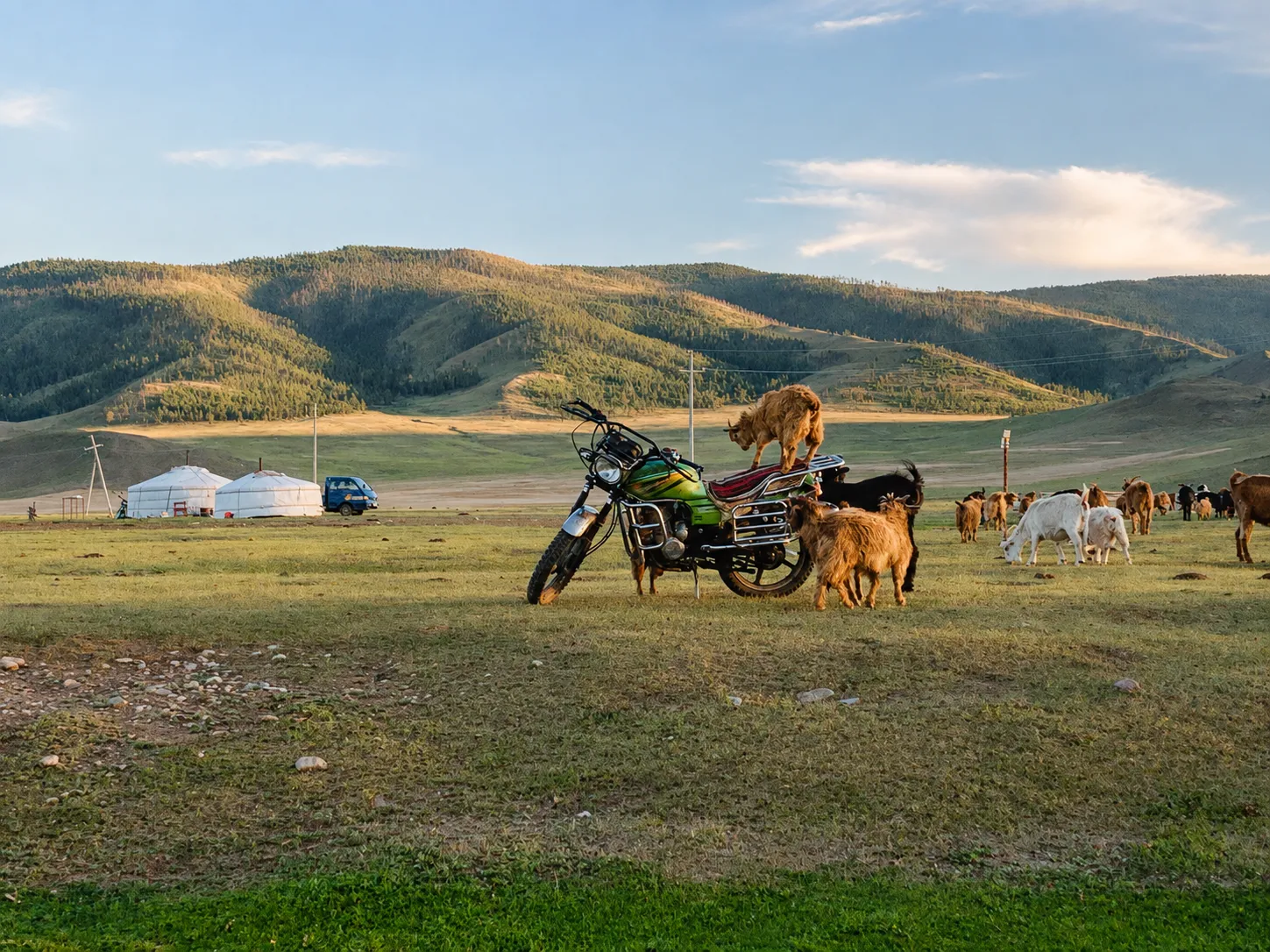
A ger is heated by a stove in the middle. In many places it is not kept burning through the night, so a ger that is warm when you go to sleep can be very cold by morning. It is normal, and worth knowing before your first night.
Fitness and altitude
- Altitude
- roughly 1,300 to 2,000 m, higher on some mountain routes
- The ground
- loose rock, snow, short steep slopes and uneven tracks
- The hard part
- sitting still outdoors in wind, and long days on tracks that are not roads
- Per expedition
- every expedition page carries its own physical rating
Much of our ground sits between roughly 1,300 and 2,000 m, although some mountain routes go higher. Altitude is not a major concern on most expeditions.
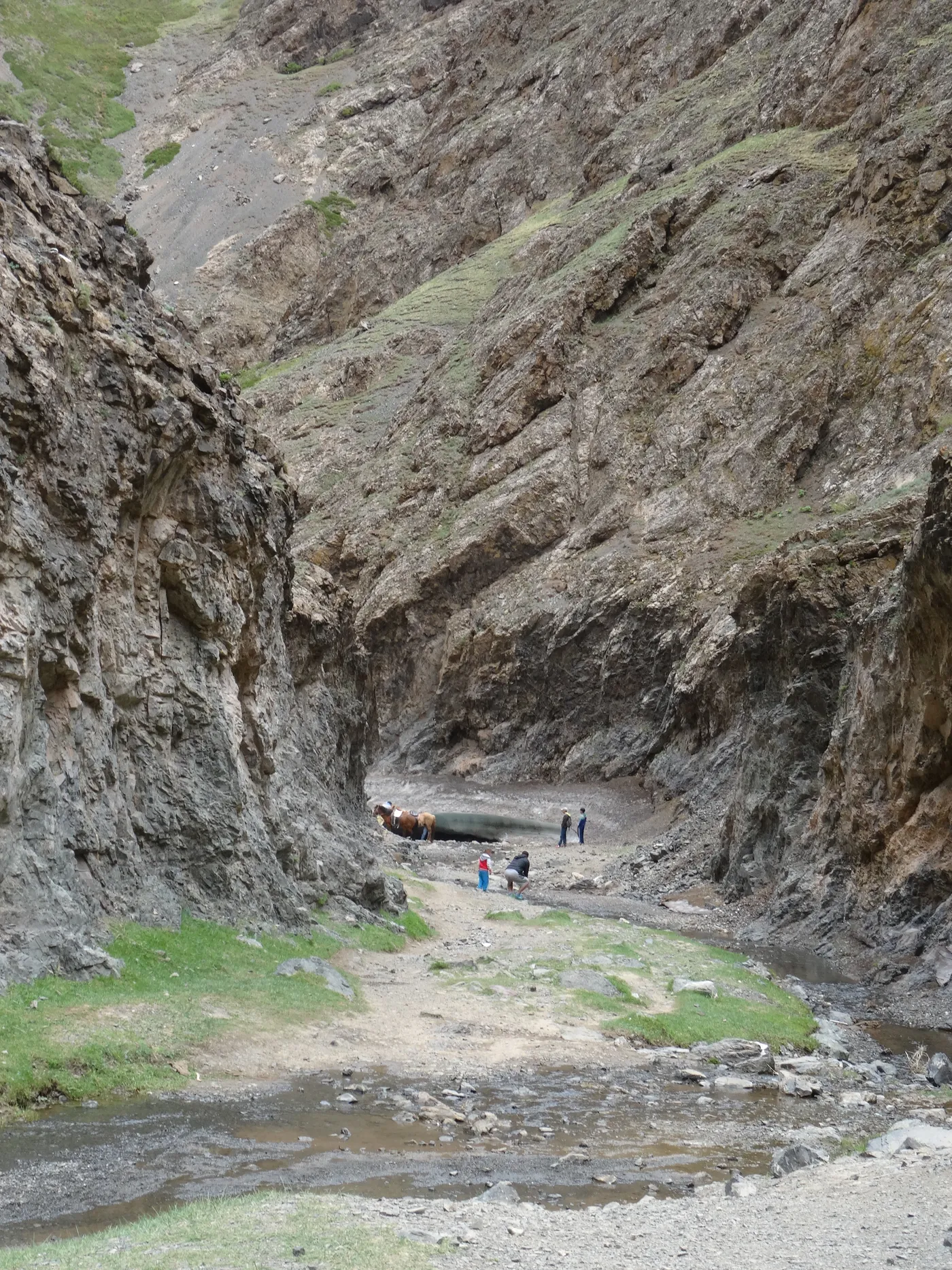
Most wildlife watching is done from a vehicle and from vantage points reached on foot, but the ground matters more than the distance : loose rock, snow, short steep slopes and uneven tracks are normal. Some expeditions also involve longer approaches or days on horseback. Every expedition page carries its own physical rating.
What these trips do ask for is a tolerance for sitting still outdoors in wind for hours, and for long days on tracks that are not roads. Those are often what tire people most.
Think twice if getting in and out of a four-wheel drive several times a day is difficult, if rough drives are painful for your back, or if you need medical care close at hand. Tell us before you book; it usually changes which expedition we suggest, not whether you come.
What to bring
- Optics
- a scope for watching, a long lens for photographing — ask what is already carried
- Layers
- wool or synthetic base, fleece or down, waterproof and windproof shell
- Sun
- SPF 50, lip balm and sunglasses, winter included
- Electricity
- 220 V / 50 Hz, sockets usually type C and E
A full list goes out with your booking, keyed to the month you are travelling. These are the items that make the difference between a good week and an endured one.
Optics first. Bring binoculars you are happy holding to your eyes for an hour at a time. For a cat on a slope a kilometre away, a spotting scope can make an enormous difference for observation; for photography, a long lens is still what makes the picture. Ask us what equipment will already be available before buying or hiring anything specifically for the trip.
Layers : wool or synthetic base, fleece or down, then a waterproof and windproof shell. Bring boots you have already walked in, wool socks, gloves you can use a camera in under warmer mittens, a hat and face protection for wind.
Sun protection matters even in winter : SPF 50, lip balm and sunglasses. A buff is useful for dust, and glasses are easier than contact lenses in dry conditions. For summer trips in the north or around wetlands, bring insect repellent.
Bring a head torch. The toilet block at a ger camp may be a hundred paces away across unlit ground.
Use a soft duffel or rucksack rather than a hard case — vehicles are loaded by hand and domestic baggage limits are tight. Bring a power bank, spare camera batteries, a plug adapter and a reusable bottle. Mongolia uses 220 V / 50 Hz electricity, most commonly with type C and E sockets. Camp power is usually available only for a few hours.
The vehicles, water, meals, accommodation, guides, spotters and permits are ours to arrange — the full list is on every expedition page. Clothing and personal optics are yours.
Roads, camps and food
- Distance
- measured in hours more than kilometres once the paved corridors end
- A road on the map
- may become a choice of tracks — the route changes with the weather
- Where you sleep
- ger camps, research centres, family camps, or tents where nothing is permanent
- Hot water
- never assume it; some remote trips mean several days without
- Diets
- tell us early — there is little to buy at short notice out there
Outside Ulaanbaatar and the main paved corridors, distance is measured in hours more than kilometres. A road on the map may become a choice of tracks, and rain, snow or a damaged crossing can change the day’s route. Itineraries need enough flexibility to absorb that.
Accommodation changes with the expedition : tourist ger camps on some routes, research centres or family camps on others, and tents where there is nothing permanent. Hot showers and private bathrooms should not be assumed, and some remote trips mean several days without either. Each expedition page explains what that trip uses.
Food becomes simpler the further we travel from Ulaanbaatar. Tell us about allergies and dietary requirements before the expedition; in remote areas there are fewer alternatives to buy at short notice.
Money, tipping, connectivity
- Currency
- The tugrik is rarely available abroad. It is easiest to exchange or withdraw money in Ulaanbaatar.
- Cards and ATMs
- Easy to use in Ulaanbaatar and larger towns. Carry cash when travelling into remote areas.
- Spending money
- Most things are already included. You will only need money for drinks, souvenirs and personal expenses.
- Tips
- Tips are optional and entirely up to you.
- Phone coverage
- Mobicom and Unitel offer the best coverage. Expect little or no signal in remote areas.
The tugrik is difficult to obtain outside Mongolia, so plan to change or withdraw money after you arrive. US dollars or euros are useful as a backup and easy to exchange in Ulaanbaatar, but the tugrik is what you will actually spend.
ATMs and card payments are easy in Ulaanbaatar and increasingly common in larger provincial towns. Before a remote section we will tell you when to withdraw cash and roughly how much you are likely to need.
Because almost everything on the expedition is already paid for, most guests need cash only for drinks, souvenirs and personal extras.
Tipping is entirely optional, and up to you to leave something for any of our team members if you wish.
Mobicom and Unitel are the two networks most visitors use, and SIM cards are easy to arrange after arrival. Coverage is good in Ulaanbaatar and provincial centres but becomes inconsistent in remote country. On some expeditions, several days without a mobile signal is normal.
Download maps, books and anything else you need offline before leaving the city, and tell people at home that a silence of several days may be part of the plan.
Health and evacuation
- Insurance
- required, and it must cover emergency medical evacuation
- Vaccinations
- no certificate required for entry
- Best facilities
- Ulaanbaatar; provincial hospitals are hours from most of our ground
Travel insurance is a condition of joining any of our expeditions and must cover emergency medical evacuation. Check the activities clause before you buy : some policies exclude horse riding. Send us the policy number and the insurer’s emergency-assistance number before you travel.
Mongolia does not currently require a routine vaccination certificate for entry, but that does not mean no vaccinations are recommended. See a travel clinic a month or two before departure and tell them where in Mongolia you are going and what you will be doing.
Water in the field is ours to supply, filtered and carried with us. Do not drink untreated water from rivers, lakes or local taps. Bring a bottle you will refill.
The best-equipped medical facilities are in Ulaanbaatar. Provincial centres have hospitals, but from much of the ground we work they are hours away. A serious incident may require a road evacuation first, then onward evacuation to Ulaanbaatar by road or air depending on location, weather and urgency. Scheduled domestic flights should not be treated as an emergency service.
That distance is why the insurance requirement is not a formality. We ask for medical information that could matter in the field — medication, serious allergies, mobility issues and conditions relevant to emergency care — and share it only with the people who need it to run the expedition safely.
Still have a question?
If there is anything this page does not cover, send us a message. We answer every enquiry ourselves.
Get in touch